Hidden Hurdles Of Outdoor LED Billboard Permits

Billboard advertising is a fast-paced business—literally. It competes for the fleeting attention of passersby who are distracted by traffic, buildings, fellow commuters, and more.

It has been found that stripping down designs to their bare minimum is an effective way to grab attention. But how does this translate into boosts for brand credibility? Let us take a closer look at the use of minimalistic design for mobile LED billboards and how it pays off.

Quick Glances That Make Lasting Impressions

Potential customers may only have seconds to register the message on a passing mobile billboard. A clean, uncluttered design showing a powerful image and a short, sharp tagline is more likely to stick in their minds than a complicated layout with too much text.

The visual is stripped down to its core message, making it easier for the observer to see, recognise, and store the message in their mind. Then comes the important part—the recall. When this logo, image, or tagline is next encountered, there is recognition. It feels familiar, and this is precisely what helps build brand credibility.

Minimalistic Designs Are Timeless

The beauty of minimalist designs lies in their simplicity. The curve of a line (think Nike) or the bold simplicity of a single colour (think Apple) can communicate volumes without overwhelming the viewer.

Minimalism has increasingly been associated with premium products, clean lines, and a focus on quality. However, even less-exclusive products can benefit from a shift to minimalistic designs to focus attention on one core feature that defines the product. This is particularly effective for highly functional products.

The good news is that this association translates perfectly to the mobile billboard format. This digital platform’s clean, minimalistic message is powerful and says that your brand is focused on quality. This perception significantly contributes to building brand credibility.

The Power Of Less

In conclusion, mobile LED billboards offer a unique advertising opportunity, but the short-lived nature of the view means that a clear and concise message is vital. The minimalistic design stands out in this environment. The simple design leaves a lasting impression and hints at the brand’s focus on quality—a key factor in building brand credibility.

Contact Face First Media today to find out how we can boost your brand credibility with minimalist designs for your mobile LED billboards.

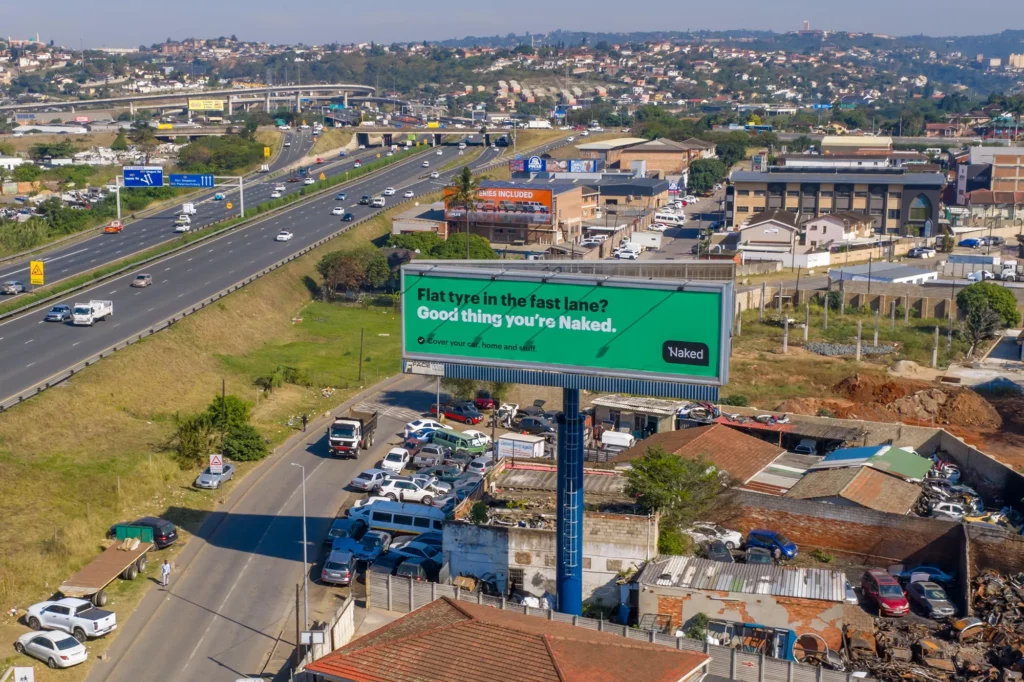
LED billboards continue to rise in popularity as more and more marketers realise the immense value of this advertising medium. Our outdoor advertising company will tell you that while this form of advertising has vast potential, it also comes with some challenges that must be overcome.

In this blog post, we will take a closer look at the hidden hurdles of outdoor LED billboard permits and how best to navigate this process in South Africa.

Guidelines And Regulations

In South Africa, municipal bylaws generally govern the size, placement and maintenance of billboards. These laws can differ from region to region. In general, however, a billboard is defined as an advertising sign larger than 4.5m square and supported by a freestanding structure. 

Before any billboard can be erected, the local municipality must be consulted. Permission can be refused if the billboard will negatively impact the surrounding area. The application process includes completing the required documentation and paying the stipulated fee.

The Advertising Standards Authority also ensures that the content complies with South African advertising standards and ethics. 

Challenges In Obtaining Permits

The major challenge is often the length of the process. The application has to circulate through various departments and authorities, which can result in delays. Zoning restrictions are also a frequent stumbling block if your application area has limitations on the size and placement of billboards. 

Environmental Impact Assessment (EIA) 

The South African Manual for Outdoor Advertising Control (SAMOAC) stipulates that an EIA must be undertaken for all outdoor advertising larger than 36 square meters in size. This is to determine the potential visual impact of the billboard on the surrounding area, the impact on traffic safety, and its possible impact on local wildlife. Environmental experts must carry out this assessment, and it can be a costly and time-consuming process. 

Two Tips For Stress-Free Permit Approval

  • Start the process early. It can take time, and delays can derail your advertising campaign. 
  • Call in the experts. Working with an outdoor advertising company familiar with the process can prevent headaches. 

If you are worried about obtaining permits for your next digital LED billboard, it is time to contact Face First Media. We are a top outdoor advertising company with the knowledge and skills to guide you through the process.

The medium remains constant, while innovating with technology.

One thing for sure is that out of home advertising has remained constant over previous years and the future looks bright, certainly in South Africa.

This is testament to the year-on-year OOH growth witnessed across multiple brands. Not only has OOH remained strong as a media touch point but we have seen media owners innovate new and bespoke campaigns that effectively target the consumer while they are outside their homes.

OOH stands the test of time and continues to prove its reach through round-the-clock visibility. Post Covid-19 marketers have had to revisit their marketing strategies and how best to target audiences.

Revisiting strategies shows an advancement of integration of OOH with other media types. Static billboards remain relevant and are the foundation of most OOH campaigns.

Digital sites skyrocket

Digital out of home (DOOH) has grown over the past years, resulting in a number of media owners investing in DOOH inventory. According to Outdoor Auditors, the number of digital sites continues to skyrocket, with 115 new screens added over the six month period between August 2023 and February 2024. As of February 2024, South Africa has 655 digital screens.

Improved data collection is key, as seen in how DOOH leverages technology and creativity to gather more accurate and insightful information about audience behaviour, preference, and demographics. This data allows for more comprehensive and effective outdoor advertising campaigns, leading to better-targeted ads and improved ROI.

Advanced data collection enables more robust performance measurement and analytics. Advertisers can track metrics such as impressions, views, dwell time and conversions with greater accuracy, providing valuable insights into campaign effectiveness, which is a big victory for OOH.

The social integration

The advancement of digital OOH and how digital integrates with social media and the spinoff this has with regards to driving traffic to websites is a win in media integration.

Programmatic advertising has also grown in South Africa, delivering highly targeted ads to audiences at  perfect moments as they move through their days. Advertisers are seeing the benefits of programmatic placement as the creative is served in contextually relevant locations, delivering more targeted messaging and engagement with consumers in a natural setting as they move throughout their day.

Programmatic has indeed given advertisers the power to reach mass audiences. It’s transforming the outdoor advertising industry by making it more data-driven, flexible and accountable.

OOH has worked well in isolation, and we have seen some bold brands run their campaigns solely on OOH placement. But OOH works well with other media types too, and increases the reach of campaigns.

Recently we have witnessed how OOH works and drives social campaigns. The beauty of DOOH has been the agility, speed, and flexibility.

Key in the media mix

OOH is still a key element within the media mix and remains trusted by most marketers.

Our conversation would be incomplete if we do not address the challenges of load shedding on digital. There are both positive and negatives this has brought.

The obvious positive, is the high dwell time in traffic when the traffic lights are not working.

The negative is the number media owners are still trying to navigate is the downtime during load shedding, with most sites not having back up power.

Having said that, OOH wields considerable power in reaching audiences, driving brand visibility, and shaping consumer behaviour, so if you are a marketing manager/strategist/brand manager you cannot afford to leave OOH out of the media marketing mix.

Ellah Ndlovu is a seasoned OOH specialist with over 15 years of experience.